The faceless YouTube production workflow we use
A transparent walkthrough of the research, script, voice, edit, packaging, approval, publishing, and analytics loop.
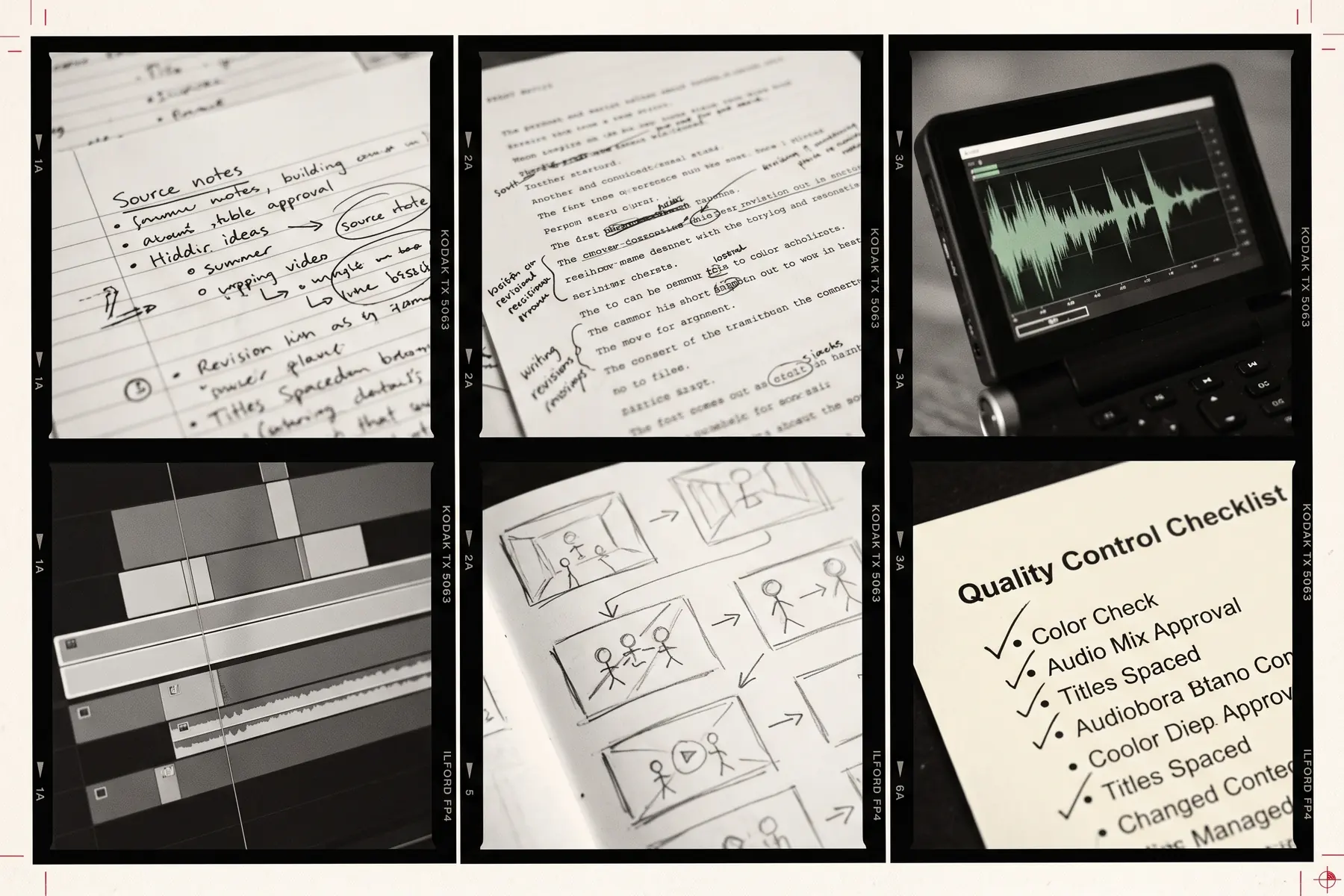
Faceless YouTube production becomes difficult at the handoffs. Research is separated from the script. The voice exposes sentences that never sounded natural. The editor receives no explanation of the viewer promise. The thumbnail is designed after the video with no connection to the original idea.
ZAN uses a staged workflow so each decision becomes an input to the next one.
Stage 1: channel and format brief
Before topic production, we document the intended viewer, channel promise, reference quality, visual constraints, voice, target duration, cadence, approval contacts, and rights boundaries.
The brief is not a mood board. It explains what the video needs to do and what the production system can realistically repeat.
Stage 2: topic slate
Research produces a slate, not one isolated title. Each direction includes the viewer tension, source path, working angle, visual feasibility, and why the topic belongs on this channel.
The slate helps avoid a common problem: approving an exciting topic that cannot support an accurate script or affordable visual treatment.
Stage 3: source-backed outline
The outline establishes the claim sequence before full writing. It identifies the opening promise, necessary context, turning points, evidence, and ending.
For factual subjects, sources are attached to the relevant section. AI-assisted discovery may help locate material, but important claims should be checked against reliable original sources.
Stage 4: script
The script is written for listening, not for a blog page. Sentences need to survive narration. Sections should move the viewer’s understanding forward rather than restating the hook.
Review checks include:
- whether the opening fulfills the title quickly;
- whether each section earns its runtime;
- whether claims are supported and appropriately qualified;
- whether visual opportunities are clear;
- whether the ending resolves the original promise.
Stage 5: voice and edit plan
Voice is selected for credibility, pacing, pronunciation, and fit, not only novelty. The edit plan identifies where footage, graphics, text, screenshots, maps, or diagrams help the viewer understand.
Visual change is not the same as visual value. Constant motion can make a video feel less intentional when images do not support the narration.
Stage 6: edit and quality control
The first cut is reviewed against the script and channel format. Quality control covers narrative clarity, pacing, audio consistency, visual rights, factual on-screen text, and technical export.
Feedback is consolidated into defined review rounds. Scattered comments from multiple people produce contradictory revisions and slow the pipeline.
Stage 7: title and thumbnail packaging
Packaging begins before the edit is finished, not five minutes before upload. The title and thumbnail need to create one clear expectation that the video can satisfy.
Our thumbnail design scope includes concept exploration, title pairing, brand-consistent templates, and performance review. Packaging supports clarity; it does not rescue an unwanted topic.
Stage 8: publish and learn
After publishing, the channel owner and production team review performance in context. A click-through rate means something different across browse, search, suggested, and an existing subscriber base. Retention needs to be read alongside the promise, traffic source, and viewer comments.
The output is a short decision record:
- what appears to have worked;
- where viewers lost interest or expectations diverged;
- what remains uncertain;
- what the next batch will keep, change, or test.
That record closes the loop. Without it, “analytics” becomes a monthly screenshot rather than an operating input.
Client responsibilities
The workflow moves when the client provides channel access through appropriate permissions, brand and risk boundaries, consolidated feedback, and approvals by the agreed dates. Delayed or contradictory feedback changes the delivery schedule.
YouTube explains safer role-based access in its channel permissions documentation. A production partner should not need the password to the owner’s primary Google account.
What the workflow does not promise
The process improves production consistency and decision quality. It cannot guarantee distribution, monetization, or revenue. Those outcomes involve the audience, niche, competition, platform systems, and business model.
You can inspect anonymized channel recordings in the ZAN results archive. To turn this workflow into a channel-specific scope, book a strategy call.